10 February was World Pulses Day. Kerstin Neumann shares information about IPK’s plans for the occasion, discusses current research projects, and highlights why peas, lentils, and other pulses matter for both health and climate.
IPK Leibniz Institute
IPK participates in World Pulses Day
Almost everyone is familiar with peas, lentils and beans. But how many different types of pulses exist?
There are around 23,000 species in the legume family, making it the third largest group of flowering plants. Only a relatively small number of these are used by humans as food: around 40–70 species. However, this is significantly more than for grasses, which include our cereals.
How many legume accessions are maintained at the IPK Federal Ex situ Genebank?
The Genebank holds more than 28,000 legume samples, including over 8,400 garden bean varieties.
You have been the co-coordinator of a Citizen Science Experiment (CSE) for several years now. This experiment is an integral part of the EU project INCREASE. What does it involve?
Rather than preserving and researching the genetic diversity of beans in just one central location, the aim is to do so through cultivation, observation and seed propagation in many private gardens. Participants grow old varieties of beans at home, document characteristics such as flowering time via an app and share seeds and experiences within the network. This achieves two goals at once: generating scientifically usable data and creating a conservation community that continues to spread old varieties.
How would you explain the enthusiasm for legumes? After all, more than 25,000 people from across Europe have participated in the project over the last five rounds.
It’s simply a highly topical issue. Not only are legumes very healthy, but they are also good for agriculture and biodiversity. They bind nitrogen in the soil, reducing the need for fertiliser, and their diverse flowers and cultivation methods create habitats for many insects and soil organisms.
But that’s not all. Beans, in particular, display a wonderful variety in flower and seed morphology, and they are really easy to grow. I believe all of these factors make them attractive to the general public. When it comes to old varieties, you’re preaching to the converted.
The Citizen Science Experiment has also been covered by the media several times.
Yes, we were very pleased about that. Regional media outlets such as MDR and Mitteldeutsche Zeitung have covered the project several times, as have newspapers from across Germany. There have also been radio and TV reports, as well as podcasts. The TV channel Arte even dedicated a 45-minute documentary to the project, entitled Superfood Beans. For filming, the production team visited the IPK and locations in Italy and France.
Are there any other projects at the IPK dealing with legumes?
Yes, several other projects exist. One example is the EU project ‘Legume Generation’, coordinated by Lars-Gernot Otto at the IPK. The regional DiP project ‘DiPisum’ is investigating how peas can contribute to structural change in former mining areas. The perspective group led by Samira El Hanafi is working on mixed crops of wheat and peas. In my own research group, a researcher funded by the Alexander von Humboldt Foundation is investigating the effects of combined drought and heat stress on chickpeas.
Murukarthick Jayakodi’s work was also important. In his independent research group, funded by the Leibniz Association, he studied the field bean genome and made a significant contribution to its elucidation. This work is now being continued in Martin Mascher’s research group at the IPK.
For a long time, the IPK’s focus was on cereals. How would you explain the sudden interest in legumes among scientists?
It’s not really that sudden! Germany has had a protein crop strategy in place since 2012, so it’s only natural that more research into protein crops has been funded since then. The Bean-Adapt project was conducted at the IPK from 2014 to 2017. As part of the project, the bean collection of the Federal Ex-situ Genebank at the IPK was made available for genetic studies. Legumes are also the second largest group in the IPK gene bank after cereals, which is another reason they are a logical focus for research.
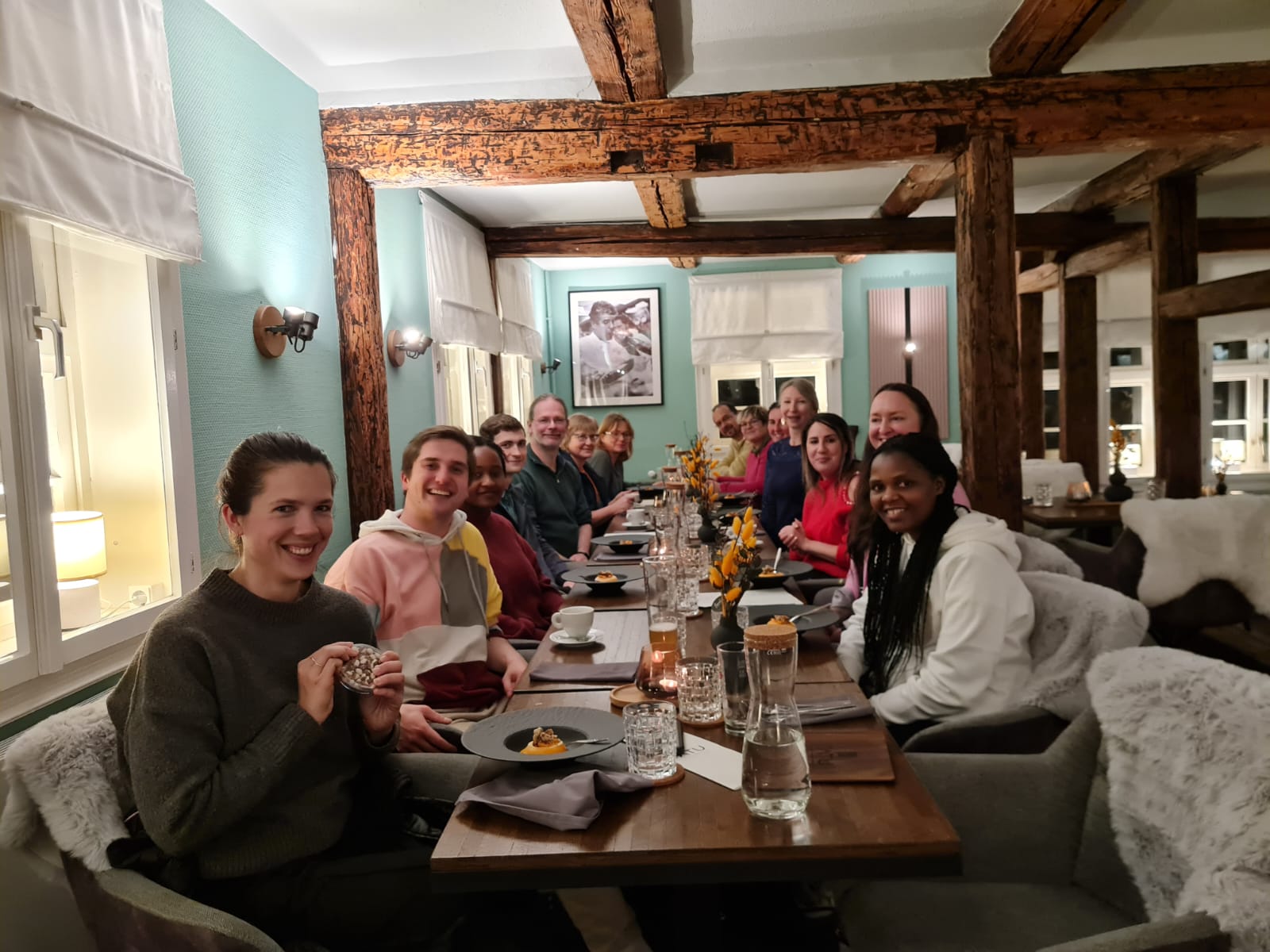
On 10 February, you went out for dinner with colleagues at a restaurant in Quedlinburg. How did this idea come about? Who was there? And most importantly, what was on the menu?
The idea originated from the INCREASE project, as part of which we have been organising activities for Legume Day for years. I thought we could do the same thing here, so I simply asked everyone at the IPK who does research on legumes if they would like to get together for a networking evening with dinner on that day. Colleagues from the gene bank, such as the new research group leader Anna Backhaus, were there, as were two long-time participants in the Citizen Science Experiment from Wernigerode who wanted to learn more about modern legume research.
We enjoyed an innovative three-course meal at the Tatu restaurant in Quedlinburg. Each course contained legumes, with options for vegetarians and non-vegetarians.
Legumes are also on the menu at the IPK casino.
The casino team has even prepared an entire legume week, during which a legume-based dish is always offered. On 10 February, all dishes were based on legumes. These included classic green beans with smoked pork, a chickpea stew and the highlight of the day: fried salmon fillet on linguine with lentils and Pernod cream.
You are familiar with the wide variety of legumes, have tried many of them, and were even invited by Sebastian Lege to appear on his TV show, ‘Lege kommt auf den Geschmack’ (‘Lege acquires a taste’), for a tasting session in the studio. What is your favourite dish?
Well, Sebastian Lege’s chilli is hard to beat, and I really enjoy it. But I’m also a big fan of soups. I love white bean stew with smoked pork or creamy tomato and vegetable soup, cooked down until it’s nice and thick.
More information:
Multimedia story ‘Peas, Lentils & Co.’
https://ipkstories.pageflow.io/leguminosen
Citizen Science Experiment in the INCREASE project:
https://www.pulsesincrease.eu/de/experiment