Apomixis

Research Topics

Head: Prof. Dr. Timothy F. Sharbel

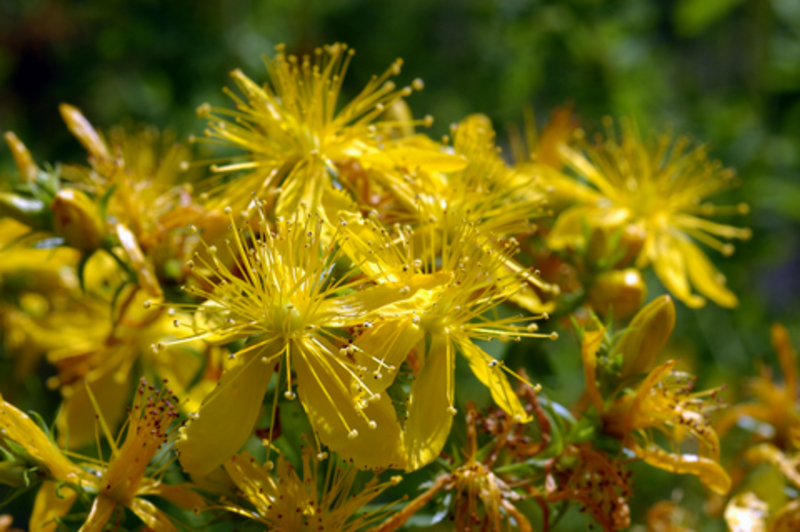
We are interested in the origin and evolution of apomixis (asexual reproduction through seed) in wild plant populations.

From a practical standpoint, apomixis technology has been referred to as a potential agricultural revolution due to the extensive benefits it could bring to crop production. From a theoretical standpoint, apomixis is considered an evolutionary-unstable form of reproduction since asexuality should lead to genetic uniformity and mutation accumulation. Apomixis (and parthenogenesis in animals) is nonetheless an extremely successful reproductive strategy in certain biogeographical contexts. Our research thus focuses on naturally-occurring genetic and phenotypic variation on both large and small geographic scales, with the goal of understanding how and why the switch from sexuality to apomixis is made. In addition, apomixis is very frequently associated with polyploidy, hybridization and genomic instability, and thus we also study these phenomena and how they are correlated with apomictic phenotypes.
Publications

Author
Title
Publications 2014

Gils M, Sreenivasulu N, Graner A:

Molecular breeding for malting quality. In: Shewry P R, Ullrich S (Eds.): Barley: chemistry and technology, 2nd ed. St. Paul, Minnesota: AACC International Inc. (2014) ISBN 978-1-891127-79-3, 293-310.

Kempe K, Rubtsova M, Gils M:

Split-gene system for hybrid wheat seed production. Proc. Natl. Acad. Sci. U.S.A. 111 (2014) 9097-9102. https://dx.doi.org/10.1073/pnas.1402836111

Publications 2013

Gils M:

Process of producing male-sterile monocotyledonous plants (Patent). EP2294204, Appl. No. EP2009/056825, Granted on 01.02.2013 (2013).

Gils M, Rubtsova M, Kempe K:

Come together: Intein-mediated protein ligation in transgenic wheat. In: Genetic transformation technologies (plants and animals) - Plant genetics and breeding technologies - Plant diseases and resistance mechanisms: February 2013, Vienna, Austria, Medimond international proceedings. Pianoro, Italy: MEDIMOND s.r.l. (2013) ISBN 978-88-7587-682-1, 27-32.

Hauptmann V, Weichert N, Menzel M, Knoch D, Paege N, Scheller J, Spohn U, Conrad U, Gils M:

Native-sized spider silk proteins synthesized in planta via intein-based multimerization. Transgenic Res. 22 (2013) 369-377. https://dx.doi.org/10.1007/s11248-012-9655-6

Kempe K, Boudichevskaia A, Jerchel R, Pescianschi D, Schmidt R, Kirchhoff M, Schachschneider R, Gils M:

Quantitative assessment of wheat pollen shed by digital image analysis of trapped airborne pollen grains. Adv. Crop Sci. Tech. 2 (2013) 119. https://dx.doi.org/10.4172/2329-8863.1000119

Kempe K, Rubtsova M, Riewe D, Gils M:

The production of male-sterile wheat plants through split barnase expression is promoted by the insertion of introns and flexible peptide linkers. Transgenic Res. 22 (2013) 1089-1105. https://dx.doi.org/10.1007/s11248-013-9714-7

Rubtsova M, Gnad H, Melzer M, Weyen J, Gils M:

The auxins centrophenoxine and 2,4-D differ in their effects on non-directly induced chromosome doubling in anther culture of wheat (T. aestivum L.). Plant Biotechnol. Rep. 7 (2013) 247-255. https://dx.doi.org/10.1007/s11816-012-0256-x

Publications 2012

Gils M:

Process of producing male-sterile monocotyledonous plants (Patent). (2012) Application No.: EP09757560.09757569.

Gils M, Rubtsova M, Kempe K:

Split-transgene expression in wheat. In: Dunwell J M, Wetten A C (Eds.): Transgenic plants: methods and protocols. (Series: Methods in molecular biology, Vol. 847) New York [u.a.]: Humana Press (2012) ISBN 978-1-61779-557-2, 123-135. https://dx.doi.org./10.1007/978-1-61779-558-9_11

Hauptmann V, Gils M, Conrad U, Phan H T:

Methods of producing and purifying polymeric proteins in transgenic plants (Patent). EP 2518081, Granted on 31.10.2012, IPK-Nr. 2011/07 (2012).

Kapusi E, Kempe K, Rubtsova M, Kumlehn J, Gils M:

phiC31 integrase-mediated site-specific recombination in barley. PLoS One 7 (2012) e45353. https://dx.doi.org/10.1371/journal.pone.0045353

Publications 2011

Kempe K, Gils M:

Pollination control technologies for hybrid breeding. Mol. Breed. 27 (2011) 417-437. https://dx.doi.org/10.1007/s11032-011-9555-0

Publications 2010

Kempe K, Rubtsova M, Berger C, Kumlehn J, Schollmeier C, Gils M:

Transgene excision from wheat chromosomes by phage phiC31 integrase. Plant Mol. Biol. 72 (2010) 673-687. https://dx.doi.org/10.1007/s11103-010-9606-7

Publications 2009

Gils M, Kempe K:

Systeme zur Kontrolle von Ausbreitungsfähigkeit und Aktivität pflanzlicher Transgene. GenomXpress 3 (2009) 6-8.

Kempe K, Rubtsova M, Gils M:

Intein-mediated protein assembly in transgenic wheat: production of active barnase and acetolactate synthase from split genes. Plant Biotechnol. J. 7 (2009) 283-297. https://dx.doi.org/10.1111/j.1467-7652.2008.00399.x

Publications 2008

Gils M, Marillonnet S, Werner S, Grützner R, Giritch A, Engler C, Schachschneider R, Klimyuk V, Gleba Y:

A novel hybrid seed system for plants. Plant Biotechnol. J. 6 (2008) 226-235. https://dx.doi.org/10.1111/j.1467-7652.2007.00318.x

Rubtsova M, Kempe K, Gils A, Ismagul A, Weyen J, Gils M:

Expression of active Streptomyces phage phiC31 integrase in transgenic wheat plants. Plant Cell Rep. 27 (2008) 1821-1831. https://dx.doi.org/10.1007/s00299-008-0604-z

Publications 2007

Gils M, Kempe K, Rubtsova M, Schachschneider R:

Der „Split Gene Approach“ für Pflanzen: Mit geteilten Genen zum vollen Ertrag. GABI-FUTURE-Brückenprojekt 'Hybridweizen': Die Etablierung eines neuartigen transgenen Systems zur Erzeugung von Hybridweizensaatgut. GenomXPress 4 (2007) 7-10.